Русский
 English
 ქართული
 Français
 Türkçe
 Հայերեն
 Қазақша
 Polski
 Azərbaycanca
 O'zbekcha
 中文
 Deutsch
 Español
 العربية
 فارسی
 हिन्दी
 עברית
 Relocation 5 min read
Moving to Georgia with Family and Kids: What You Need to Know
 GustawsonEditorial Team · Bebgur
Moving with kids is different from moving alone in more than just how much luggage you bring: it adds paperwork for the whole family, questions about children's healthcare, road safety, and what to actually do with a kid in your free time. Here is what matters, in order.
Residence Permits and Documents for the Whole Family
A spouse and minor children get a residence permit in Georgia together with the main applicant, on the same basis: buying property, business investment, and so on, with no extra investment required per family member.
Processing runs alongside the main paperwork at the House of Justice, so there is no need to assemble a separate package for the child apart from the parent: a birth certificate is enough, plus a marriage certificate if you have one, translated into Georgian.
For school-age children you will also need a record from the current school to transfer the paperwork into a Georgian institution or an international school. One legal nuance worth knowing: being born on Georgian territory does not by itself grant Georgian citizenship if both parents are foreign nationals, citizenship follows the parents, not the place of birth.
Kindergartens and Schools: Timing a Move Around the School Year
If the child is very young, under 2, nursery groups are almost nonexistent in municipal kindergartens: for that age, a private kindergarten or a nanny is practically the only option. From age 2 you can join the queue for a municipal kindergarten: it is free, meals included, but enrollment only runs through the kids.org.ge portal, in Georgian, once a year in early July, and a foreign child needs a residence permit and a Georgian personal number to apply.
If the move lands mid-school-year, which it usually does, the realistic option for the interim is a private kindergarten, about 960 lari a month on average in Tbilisi, with bilingual and Montessori programs at the top of the price range.
School works similarly: municipal school is free, but taught entirely in Georgian, and enrollment for first grade runs from February to July on registration.emis.ge (the child needs to turn 6 by September 15).
If you are pulling a child out of school in another country mid-year, most international schools (QSI, New School, BIST, the German school, the French school) run rolling admissions year-round, but primary school spots fill up fast: apply 6-12 months ahead, not once you have already arrived.
You will typically need a standard package on hand: a birth certificate, a photo of the child, and a report card or diploma from the previous school; transferring documents into a Georgian public school or getting past grades recognized requires going through the National Center for Educational Quality Enhancement (NCEQE), though international schools usually handle that themselves.
Prices by type of institution and admission conditions for foreigners vary widely, and the path you pick determines what education in Georgia will ultimately look like for your child.
What a Family's Move Costs
Moving costs for a family of three or four usually run higher than for a single adult, mainly because of apartment size: you need one or two extra bedrooms, and the rent gap between a one-bedroom and a three-bedroom apartment in Tbilisi can run 500-700 dollars a month.
The one-time and monthly costs for a single person that make up the overall budget for moving to Georgia should not simply be multiplied by headcount for a family: they need adjusting for shared costs like rent and utilities, which do not grow in proportion to family size.
Pediatricians and Children's Healthcare
The country's largest children's hospital is M. Iashvili in Tbilisi: it has an international department and European-trained, English-speaking doctors, and takes complicated cases referred from across the country. Beyond it there are private networks with pediatricians and house calls, such as American Medical Centers, and seeing a doctor in Georgia needs no referral, so a pediatrician is booked directly.
When choosing insurance for the family, check whether it covers children's checkups and vaccinations separately from the general limit, and keep in mind that health insurance in Georgia must meet minimum coverage requirements to be accepted at the border.
Sports and Activities for Kids
Beyond school, Tbilisi has a solid network of children's sports. The municipal Tbilisi Sports and Youth Center gives affordable access to pools, tennis courts, and football fields across the city.
Private sections (judo, karate, gymnastics, football, swimming from 2 months old, ballroom and traditional Georgian dance) usually cost 50-200 lari a month and are often taught in English or Russian alongside Georgian, so foreign kids do not need to adapt to the language specifically.
Car Safety: Rules for Children
Georgia requires a car seat for children under 7, and the child must ride in the back seat; children under 12 in general should only ride in the back.
The fine for breaking the rule is fairly small, around 40 lari, but taxis and ride-hailing in Georgia almost never provide child seats: if you take taxis with a child often, it makes more sense to buy a compact folding car seat and carry it with you than to count on the driver having one.
Strollers, Sidewalks, and Getting Around
Tbilisi's Old Town and parts of the central streets are cobblestone, with unexpected stairs and steep climbs, making them awkward or outright impossible for a regular stroller. Vake and Saburtalo, along with the Kura embankment and Rike Park, work best for stroller walks: the sidewalks there are flat and wide with no sudden elevation changes.
A practical tip from parents who have already made the move: bring a compact folding stroller or a baby carrier for trips to the center and the Old Town, rather than a bulky city model.
Places to Take Kids
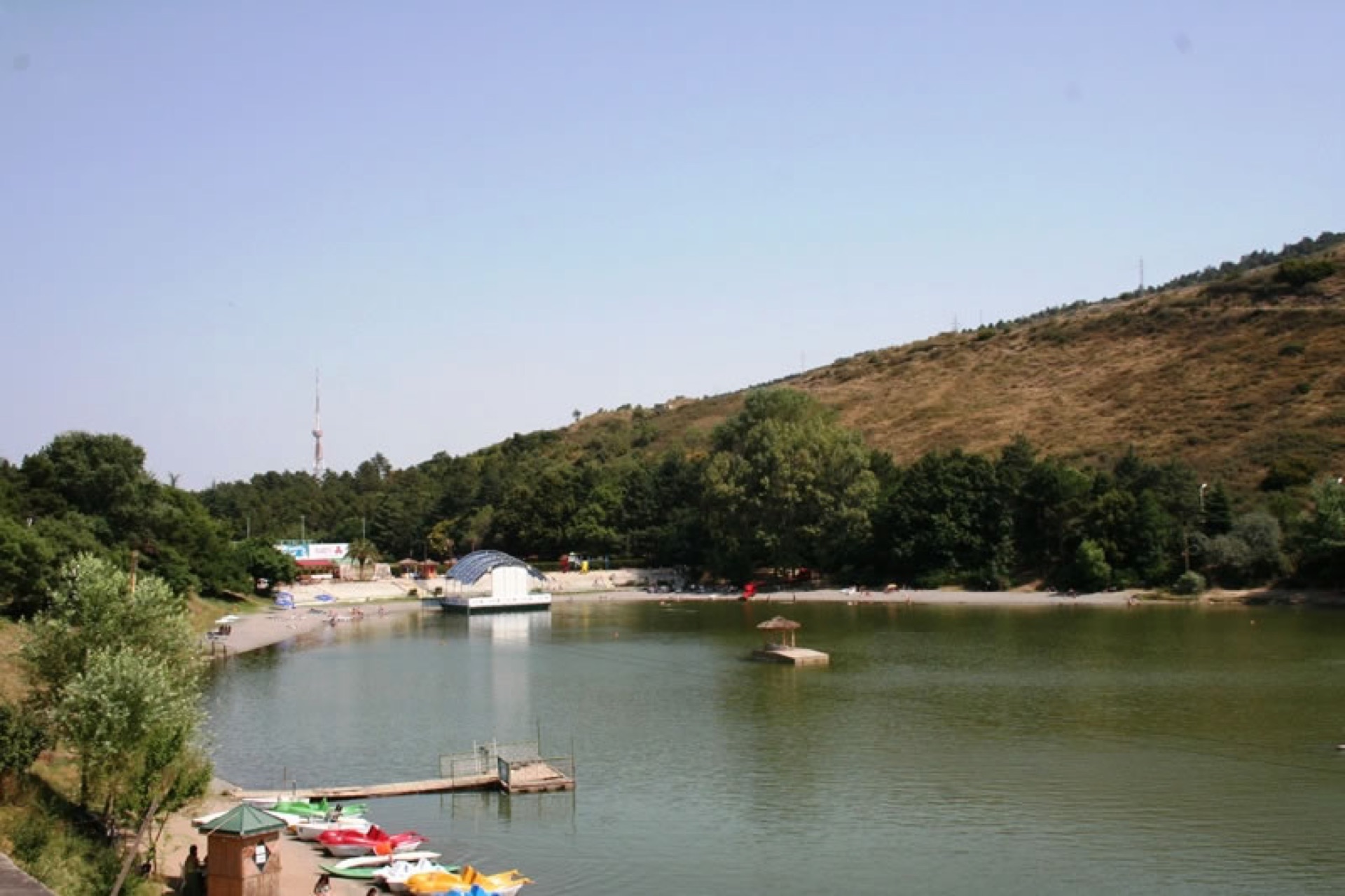
Tbilisi has a handful of places families with kids visit regularly: Mtatsminda Park at the top of the mountain, with a Ferris wheel, carousels, and a cable car giving views over the whole city; Tbilisi Zoo, with an aquarium in the Vere river valley; and Turtle Lake on the edge of the city, where you can rent a boat, cycle along the embankment, or just have a picnic.
Another good option for a day with younger kids is Mziuri Park in the city center: it has unusual play structures and sculptures based on Georgian cartoons, and local families go there just as often as visitors.
Frequently Asked Questions
Municipal kindergartens accept children from age 2, but enrollment happens only once a year through the kids.org.ge portal, in early July, for a September start.
You can only enroll in a municipal kindergarten or school at the start of the school year. For the transition period, a private kindergarten (about 960 lari a month in Tbilisi) or an international school with rolling admissions usually works as a stopgap.
Yes, a spouse and minor children get a residence permit on the same basis as the main applicant (property, business, etc.), with no extra investment required for each family member.
Yes, the country's largest children's hospital, M. Iashvili in Tbilisi, has an international department, and there are also private networks with English-speaking pediatricians and house calls.