Русский
 English
 ქართული
 Français
 Türkçe
 Հայերեն
 Қазақша
 Polski
 Azərbaycanca
 O'zbekcha
 中文
 Deutsch
 Español
 العربية
 فارسی
 हिन्दी
 עברית
 Vacation 8 min read
The Black Sea in Georgia: Resorts, Beaches, Season and Vacation Prices
 GustawsonEditorial Team · Bebgur
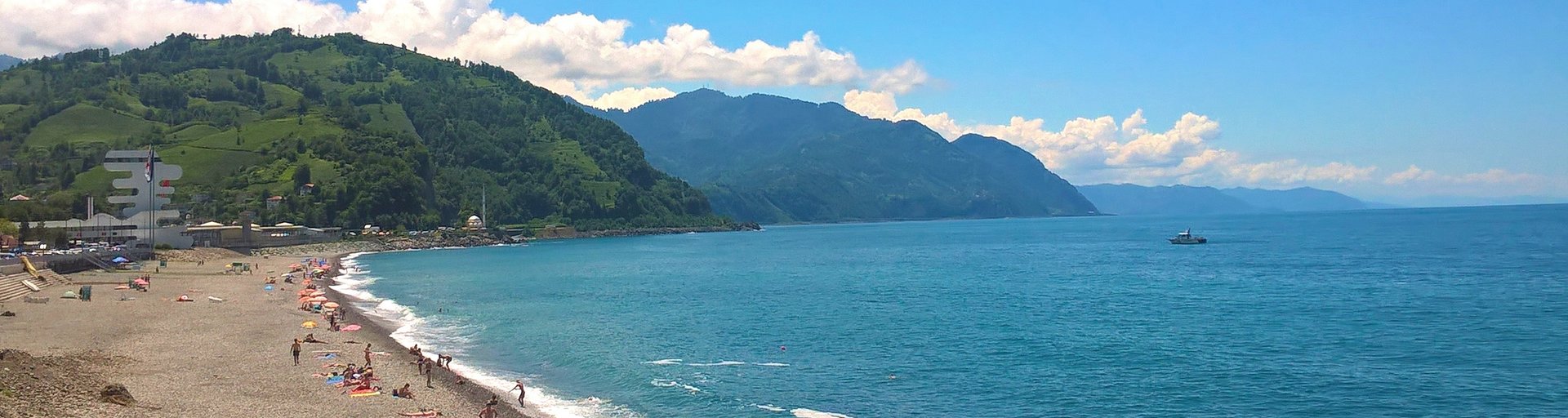
Georgia's Black Sea coast runs from Sarpi on the Turkish border in the south to Anaklia in the north. The swimming season lasts from late June to the end of September, and in July and August the sea warms up to 25°C.
Batumi and the resorts south of it have pebble beaches, and the farther south you go, the clearer the water gets. North of Kobuleti the beaches turn sandy, and in Ureki and Shekvetili the sand is black and magnetic, with shallow water close to the shore. Every beach is free to use, and the Stadler train gets you from Tbilisi to Batumi in about 4 hours.
The best time to visit the Georgian coast
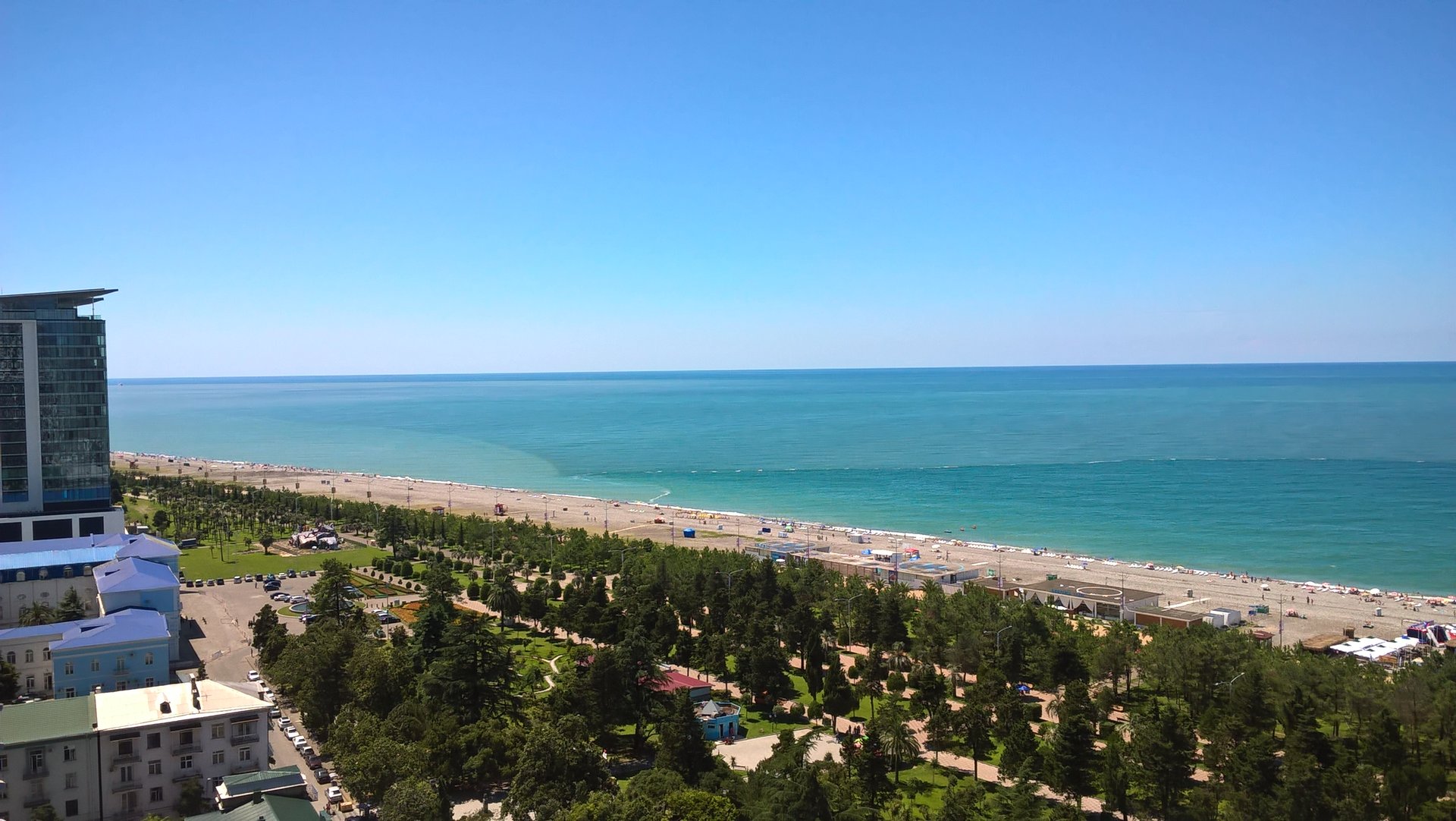
July and August bring the biggest crowds and the highest prices on the coast. September is the velvet season, when the water is still warm and the beaches empty out after the first week of the month, though it does rain noticeably more often.
| Month | Sea temperature in Batumi | Rainfall |
|---|---|---|
| May | 16°C | 108 mm |
| June | 22°C | 142 mm |
| July | 25°C | 168 mm |
| August | 25°C | 205 mm |
| September | 24°C | 262 mm |
| October | 20°C | 277 mm |
May is the driest month, but the sea only reaches about 16°C, which is too cold for most swimmers. In Ureki and the other small resort villages the season is shorter than in Batumi. Most hotels and cafes there open from June to mid-September, and in winter almost everything is closed.
The climate in Georgia is much wetter on the coast than in Tbilisi, and Batumi gets 2,435 mm of rain a year. Even in summer it is worth allowing for a couple of rainy days.
Pebbles or sand: how to choose a resort
| Resort | Beach | Location | Best for |
|---|---|---|---|
| Batumi | pebbles | the coast's main city | city break, restaurants, sightseeing |
| Gonio | pebbles | 12 km south of Batumi | a quiet stay below the mountains |
| Kvariati | large pebbles | 15 km south | clear water, snorkeling, diving |
| Sarpi | pebbles and rocks | 17 km south, on the Turkish border | the clearest water on the coast |
| Tsikhisdziri | pebbles | 20 km north | a quiet stay among pine trees |
| Kobuleti | sand mixed with fine pebbles | 25-30 km north | families, a budget vacation |
| Shekvetili | black magnetic sand | 45 km north | small children, amusement parks |
| Ureki | black magnetic sand | about 55 km north | small children, shallow water |
| Anaklia | sand and pebbles | 2.5 hours' drive north | a wide, uncrowded beach |
Batumi suits travelers who want restaurants, evening walks and sightseeing within easy reach of the beach. The pebble beach runs along a 7 km seaside boulevard and has showers, changing rooms and paid toilets. Near the port in the city center the water is murkier, so it is better to swim off the New Boulevard or near Green Cape.
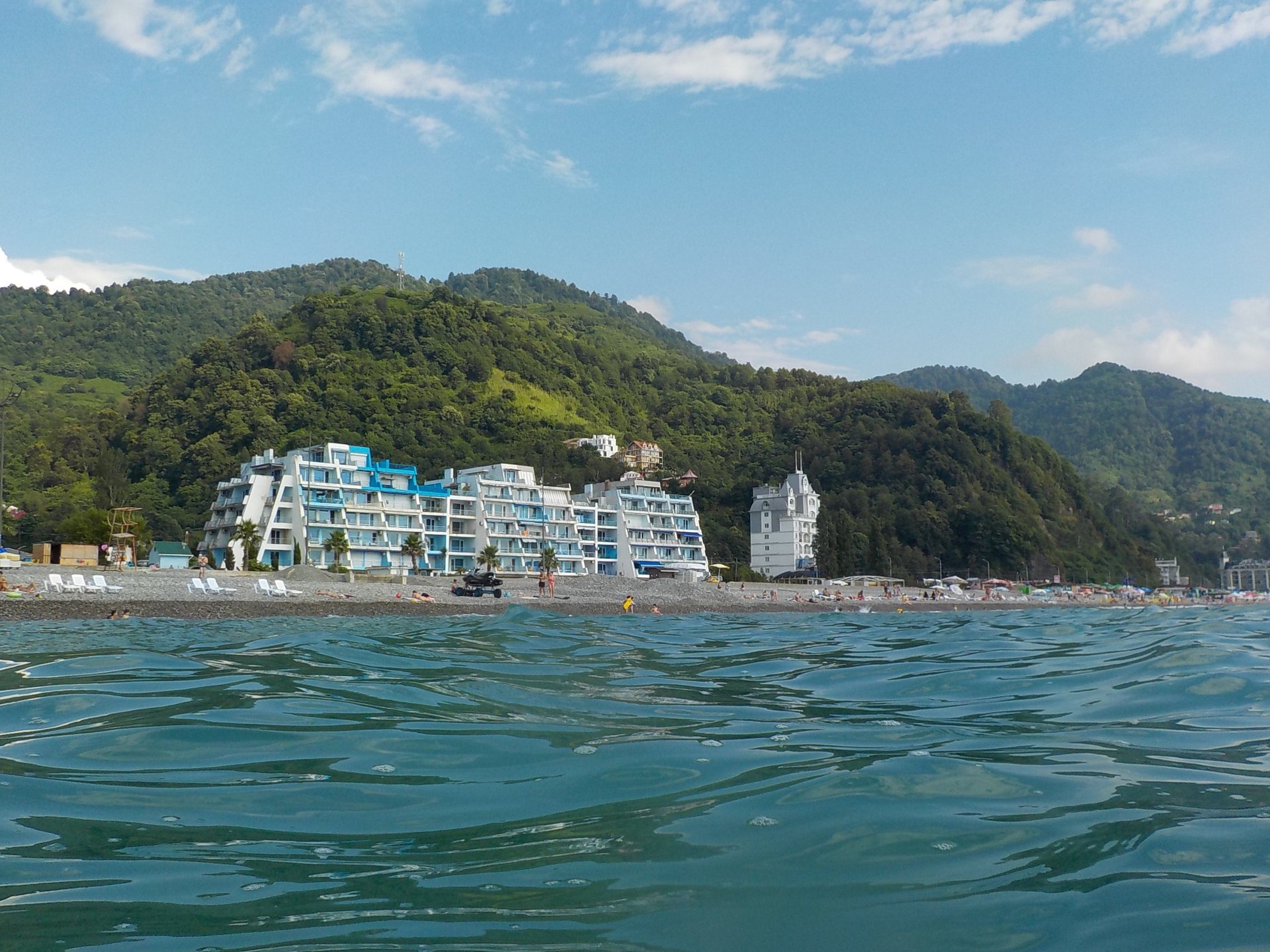
South of Batumi the mountains come right down to the sea, and there are hardly any rivers to wash silt into it. That is why Gonio, Kvariati and Sarpi have the clearest water on the whole coast. Georgia's National Tourism Administration lists Kvariati as one of the best diving spots in the country. The beach at Sarpi is small, so in summer it pays to get there in the morning.
City bus No. 16 runs from Batumi to Gonio, Kvariati and Sarpi. Its last stop in Sarpi is right next to the border crossing between Georgia and Turkey, which you can cross on foot.
Kobuleti is quieter and cheaper than Batumi. The town stretches for more than 10 km along the sea, with pine groves behind the beach, and the beach itself is sand mixed with fine pebbles. Just outside town lie the Kobuleti Protected Areas, where wooden boardwalks lead across the peat bogs.
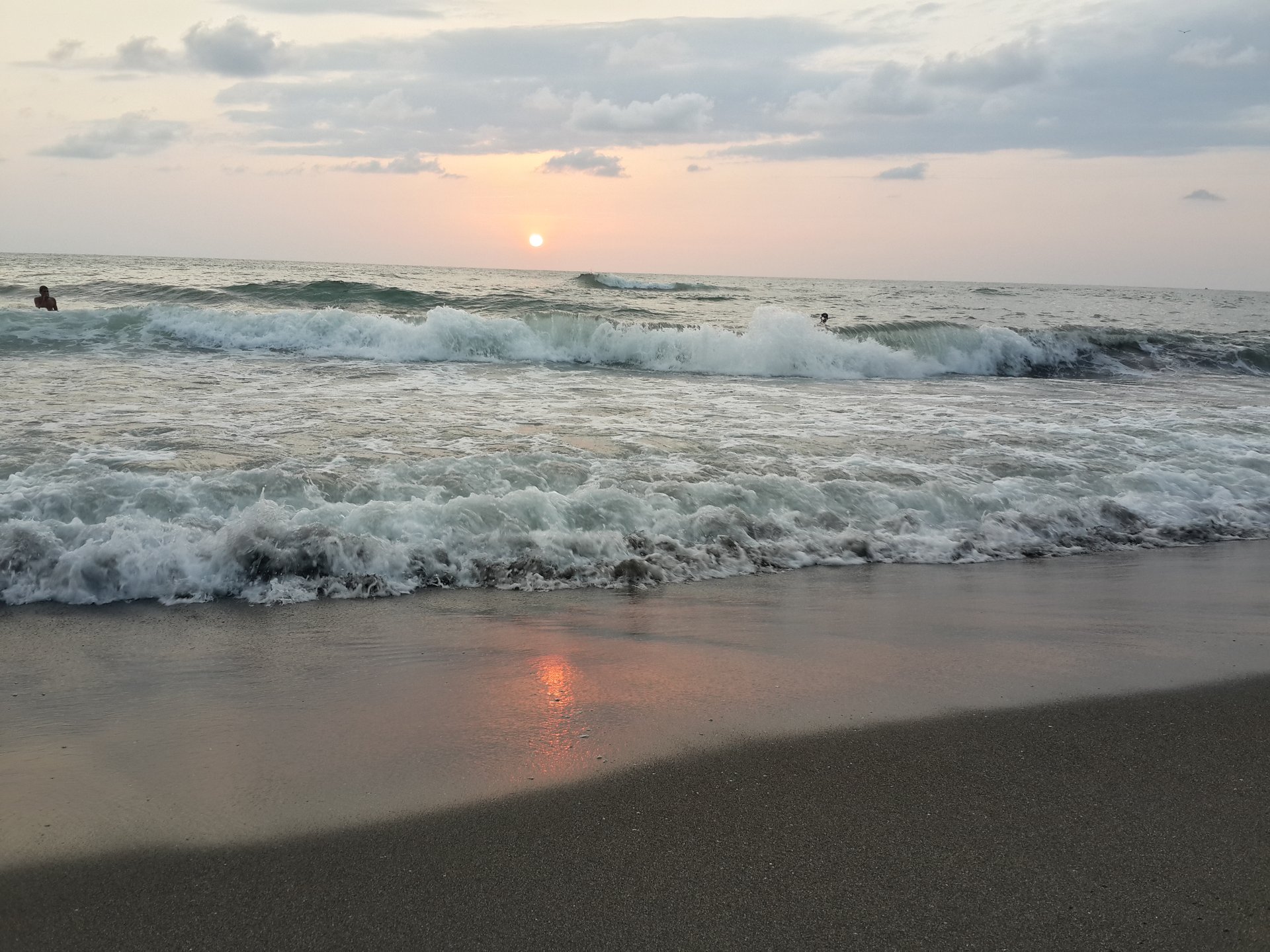
The beaches in Shekvetili and Ureki are covered in black sand. It contains a lot of magnetite, which is why people call it magnetic sand. The seabed slopes very gently, and you can wade out 30-40 m before the water gets deep, which is why families with small children usually choose these two resorts.
The beach in Shekvetili runs for 3 km along a pine forest, while the strip of magnetic sand in Ureki covers about 1.5 km of shoreline.
Farther north lies Grigoleti, which has the same dark sand and pine forest but almost no cafes or hotels, so bring your own food and water.
Anaklia sits at the mouth of the Enguri River, right next to the occupation line with Abkhazia. The beach is wide and covered in fine sand mixed with pebbles, and a 504 m pedestrian bridge crosses the river to neighboring Ganmukhuri. An electronic music festival takes place in Anaklia in summer, but for the rest of the year the promenade is nearly empty.
How to get to the Georgian coast
The fastest way from Tbilisi is the Stadler train, which reaches Batumi in about 4 hours. A second-class ticket costs from 35 lari, and a first-class ticket costs about 75 lari. Along the way the train stops at Kutaisi Airport station, Ureki and Kobuleti.
Stadler trains leave Tbilisi every day at 08:00 and 17:10, and several extra departures are added in summer. Tickets go on sale on railway.ge 20 days before departure, and for August trips it is worth buying as early as you can, because seats sell out fast.
Besides the train, marshrutkas and buses between cities in Georgia also run to Batumi. They take longer, but they leave more often.
If you fly into Kutaisi Airport, the same train is the easiest way to reach the sea. The station is 2-2.5 km from the terminal, a free shuttle minibus takes passengers there, and the ride to Batumi takes under 2 hours.
A Georgian Bus coach also runs from Kutaisi Airport to Batumi and waits for passengers right outside the terminal exit. Taxis and private drivers are among the other airport transfers in Georgia.
Batumi Airport is right next to the Turkish border, which makes it the closest airport for Gonio, Kvariati and Sarpi. If you are heading for Anaklia, take the train from Tbilisi to Zugdidi and then cover the last 30 km or so by marshrutka or taxi.
By road, the trip from Tbilisi to Batumi is about 360 km and takes 4.5-6 hours. If you want to visit several resorts on one trip, a car is the most convenient option, and car rental in Georgia is available both in Batumi and at the airports.
Getting around Adjara by bus is easy. A ride on a Batumi city bus costs 70 tetri with a Batumi Card or about 1 lari with a bank card, and drivers do not accept cash. Marshrutkas and the train both run from Batumi to Kobuleti, and the trip takes about 40 minutes.
What a beach vacation in Georgia costs
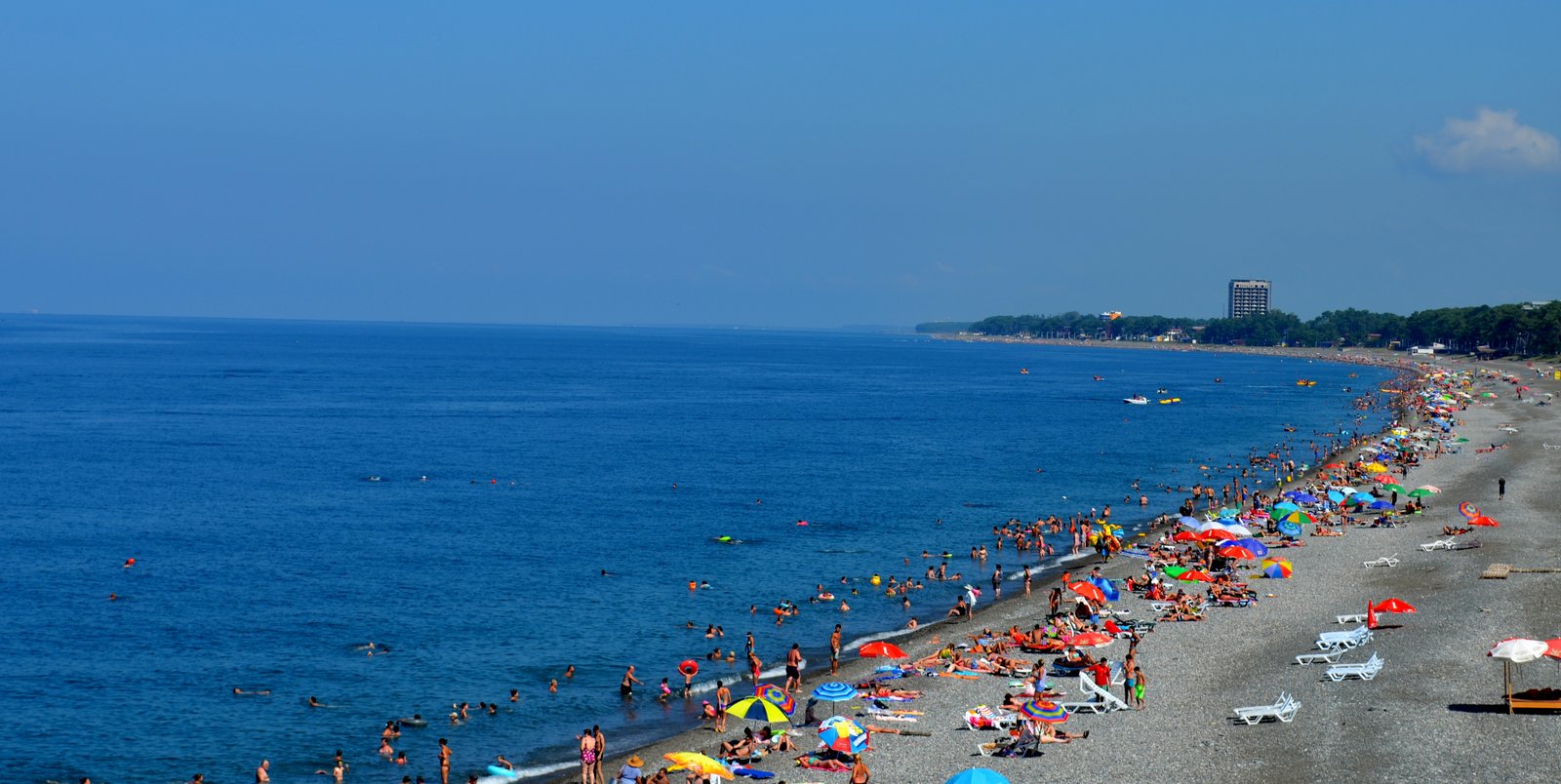
According to a PMCG study of prices on booking.com, in August 2026 a room in a guesthouse in Adjara cost about 120 lari a night on average, and a room in a three-star hotel cost about 240 lari. In July, prices in Adjara jumped by 25% in a single month, so a room by the sea costs noticeably less in June than at the height of the season.
In Guria, the region where Ureki and Shekvetili are located, guesthouses are more expensive on average and cost about 210 lari a night. Five-star hotels there are the most expensive in the country, with an average of 1,081 lari a night. For July and August it is best to book a room by the sea well in advance.
There is no charge for using the beach itself; you only pay if you want a sun lounger and an umbrella. On basic city beaches a set costs from 5 lari a day, while at the beach clubs on the New Boulevard the price goes up to 30 lari.
Compared with the usual cost of living in Georgia, food by the sea and along the boulevard is more expensive, but just a block back from the waterfront the cafes are noticeably cheaper. Small cafes and guesthouses outside Batumi often have no card terminal, so it is wise to carry some cash.
What to see on the coast
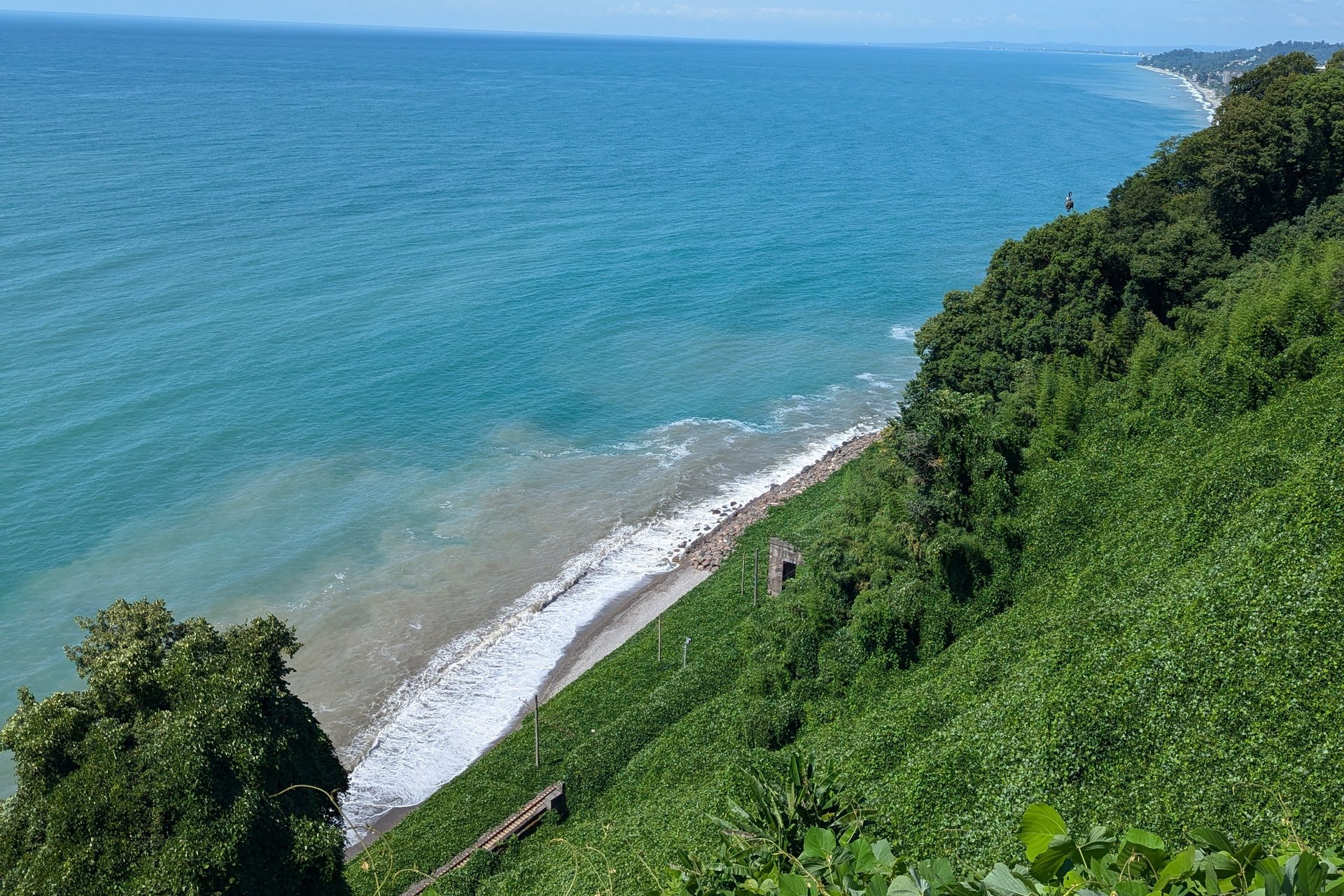
- The Batumi Botanical Garden is on Green Cape, 9 km from Batumi, and covers 113 hectares on a hillside above the sea. A ticket for foreigners costs 25 lari, and the garden is open from 09:00 to 20:00.
- The Gonio-Apsaros Fortress stands 12 km from Batumi. A ticket for foreigners costs 15 lari, and the fortress is open from 10:00 to 17:00.
- The Batumi Dolphinarium puts on a show every day except Monday, and in summer there are three shows a day. A ticket to the show costs 30 lari, and swimming with the dolphins costs 200 lari; children are allowed from age 5.
- The Tsitsinatela amusement park in Shekvetili has about 40 rides. In season it is open every day from 18:00 until midnight.
- The ruins of the 6th-century Petra Fortress stand on a rocky headland near Tsikhisdziri.
Water safety and beach rules
When a red flag is flying on the beach, swimming is prohibited. Take this rule seriously. On 25 July 2026 a swimmer drowned in Shekvetili after going into the water while the red flags were already up.
On pebble beaches the water gets deep just a few steps from the shore, so keep an especially close eye on children. To protect your feet from the pebbles, bring a pair of water shoes. Lifeguards are on duty on Batumi's main beaches from June to September, but there are none on undeveloped beaches.
Jellyfish show up in the second half of the summer, but none of them are life-threatening. If you get stung, rinse the area with seawater rather than fresh water, and do not rub it. If the reaction is severe, especially in a child, call 112.
Street crime in Georgia is low, but pickpockets do work the crowded Batumi promenade in summer. Do not leave your phone or money unattended on the beach.
Georgia's National Environmental Agency takes water samples every month at 14 points along the coast, and in July 2026 all readings were within normal limits.
Littering on the beach carries a fine under the Waste Management Code:
- litter weighing up to 2 kg costs you 80 lari;
- litter thrown from a car costs 250 lari;
- litter weighing 2 kg or more costs 500 lari;
- household waste thrown into the sea costs 100-300 lari.
The law does not ban smoking on an open beach, but smoking in cafes and on public transport carries a fine of 100 lari.
Key takeaways
- You can swim in the sea in Georgia from late June to the end of September, and in July and August the water reaches 25°C.
- Batumi and the resorts to its south have pebble beaches, with the clearest water in Kvariati and Sarpi. Shekvetili and Ureki have black sand and shallow water, which makes them the easier choice for families with small children.
- The Stadler train takes about 4 hours from Tbilisi to Batumi, tickets start at 35 lari, and along the way it stops at Kutaisi Airport, Ureki and Kobuleti.
- Beaches are free, a sun lounger with an umbrella costs 5-30 lari a day, and in August a guesthouse room in Adjara cost about 120 lari a night on average.
- Do not swim when a red flag is flying, and call 112 in any emergency in Georgia.
Frequently Asked Questions
You can swim from late June to the end of September. In July and August the sea warms up to 25°C, but those months also bring the biggest crowds and the highest prices. In September the water is still about 24°C and there are far fewer people, though it rains more often.
Sandy beaches start north of Kobuleti. In Shekvetili and Ureki the beaches are covered in black magnetic sand and the seabed slopes gently, so families with small children usually go there. Batumi, Gonio, Kvariati and Sarpi have pebble beaches.
No, the beaches are free. You only pay if you want a sun lounger and an umbrella: on basic Batumi beaches a set costs from 5 lari a day, and at the beach clubs the price goes up to 30 lari.
The fastest option is the Stadler train, which reaches Batumi in about 4 hours, with tickets from 35 lari. Along the way it stops at Kutaisi Airport, Ureki and Kobuleti. Marshrutkas and buses also run to Batumi.