Русский
 English
 ქართული
 Français
 Türkçe
 Հայերեն
 Қазақша
 Polski
 Azərbaycanca
 O'zbekcha
 中文
 Deutsch
 Español
 العربية
 فارسی
 हिन्दी
 עברית
 Healthcare 6 min read
Healthcare and Health Insurance for Living in Georgia: State Program, Costs and Clinics
 GustawsonEditorial Team · Bebgur
In Georgia, a state ambulance costs nothing for anyone, foreigners included. A local health policy for foreign residents starts at 50 lari a month and covers emergency care, hospital treatment and diagnostics, while seeing a GP at a chain clinic without insurance costs 50 to 70 lari.
The state program is built mainly for Georgian citizens, so most people who live here on a residence permit buy a policy of their own.
Travel Insurance vs. Health Cover for Living in Georgia
Tourists need an entry policy for every day of their stay with at least 30,000 lari of cover, and travel insurance for Georgia starts at 2 lari a day. It pays for emergencies only. Planned treatment, chronic conditions and routine doctor visits aren't included, so it won't work for someone who lives here.
Residence permit holders aren't asked for insurance at the border, but that exemption applies only to entry. Once inside the country, they pay for treatment with a private policy or out of pocket, unless they qualify for the free part of the state program.
If you live in Georgia on the one-year visa-free stay without a residence permit, you need an entry insurance policy for Georgia that covers every day of your stay, including the days after you return from a trip abroad. If the policy terms say it ends when you leave the country, you buy a new one when you come back. For routine doctor visits, you can add a private policy from a local insurer.
A policy for 6 or 12 months
You can buy an entry policy for your whole stay in one go, as long as it covers no more than a year. With the insurers in the table, the price is strictly proportional to the number of days, so a six-month policy costs exactly six times as much as a one-month one.
| Policy | 30 days | 180 days | 365 days |
|---|---|---|---|
| International, cover up to $50,000 | $29.70 | $178.20 | $361.35 |
| International, cover up to $150,000 | $52.50 | $315 | $638.75 |
| Georgian insurer, cover of 30,000 lari | $105 | $630 | $1,277.50 |
The prices in the table are examples. The insurers' own calculators produced them on 21 October 2026 for a 35-year-old traveller who buys the policy before leaving home. The price depends on age, dates and plan, so check the exact amount and terms on the insurer's website before you buy. The Georgian insurer's rate in the table isn't the lowest on the market, and entry policies from other Georgian companies start at 2 lari a day.
If you are staying for a long time, check three things in the policy terms in advance: what it costs if you buy it once you are already in Georgia, which day it starts to apply, and whether you need a return ticket to get paid. With some insurers, a policy bought after arrival costs twice as much and only covers you from the fourth day, and without a return ticket the payout is capped at 1% of the sum insured. It is also worth looking at the limit per claim, because it can be much lower than the total cover.
Which Foreign Residents Qualify for the State Program
On paper, any foreigner with a residence permit can join the Universal Healthcare Program on the same terms as Georgian citizens. The full package is free only for a few groups:
- Socially vulnerable families with a rating of up to 70,000 points in the social assistance database
- Recipients of a Georgian state pension, which starts at 60 for women and 65 for men
- Children under 6 and students
- People with severe disabilities and children with disabilities
A pension from another country doesn't count as a Georgian state pension.
Anyone earning more than 40,000 lari a year is left out of the program entirely. Don't confuse this cutoff with the property tax exemption in Georgia, which since 30 September 2026 applies to families earning up to 100,000 lari a year.
Most expats with a residence permit in Georgia don't fall into any of these groups. The program gives them next to nothing for free, so the real choice is between private insurance and paying for treatment themselves. The one exception is antenatal care: for women with a permanent residence permit, the state program pays for 8 visits during pregnancy.
How Much Private Insurance Costs
Public health insurance from your home country usually won't pay for treatment in Georgia, and US Medicare, for example, generally doesn't cover care abroad. Besides local policies, you can buy international expat health insurance, which is often the main option after 70, since local plans are sold only up to 60 or 70.
Annual policies for foreigners living in Georgia are sold by local insurers such as GPI Holding, Ardi, TBC Insurance, Aldagi, Unison, PSP Insurance and Imedi L. At Credo Bank service centers, the Imedi L Med+ package costs 600 lari a year, or 50 lari a month in installments, while Med Max starts at 960 lari a year (80 lari a month). Both are available up to age 60.
The Vitamin policy for foreigners from Ardi costs 139 lari a month in installments and is available up to age 70. Whichever plan you pick, count it as a regular expense in your budget for moving to Georgia, alongside rent and utilities.
A basic package typically pays in full for emergency care, as well as hospital stays, surgery and diagnostics. Dental care and medicines tend to be covered only partly or offered as add-ons.
Standard policies almost never cover pre-existing conditions, pregnancy in the first months after you join, or planned treatment of chronic illness, so read those clauses before you sign. Pregnancy and childbirth cover comes as a separate option with a waiting period of 9 to 12 months, which means a policy for giving birth in Georgia has to be in place before conception.
What Treatment Costs Without Insurance
At private clinics and labs, out-of-pocket prices look roughly like this:
| Service | Price |
|---|---|
| GP visit | 50 to 70 lari at a chain clinic, 100 to 200 lari at a clinic for foreigners |
| Specialist consultation | 60 to 100 lari at a chain clinic, 150 to 250 lari at a clinic for foreigners |
| Complete blood count at Synevo | about 20 lari |
| MRI | 270 to 680 lari |
| Emergency room visit | 80 to 200 lari, excluding further treatment |
At private clinics you'll usually wait 15 to 45 minutes. Many doctors at Tbilisi's top clinics did part of their training or residency in Europe, Israel or the United States.
To give a sense of scale, an appendectomy with a hospital stay at a private hospital in Tbilisi costs 3,000 to 5,000 lari without insurance. With a valid policy, the patient usually pays only a deductible of 100 to 300 lari, and the clinic bills the insurer directly for the rest.
Dental work is far cheaper than in Western Europe, and the quality is comparable. An implant alone at dental clinics in Georgia starts at about 1,000 lari (around $385), and a complete tooth on an implant costs 1,600 to 4,000 lari (around $620 to $1,540). These prices already bring a modest stream of dental tourists to Georgia.
Free Ambulance, Paid Hospital Care
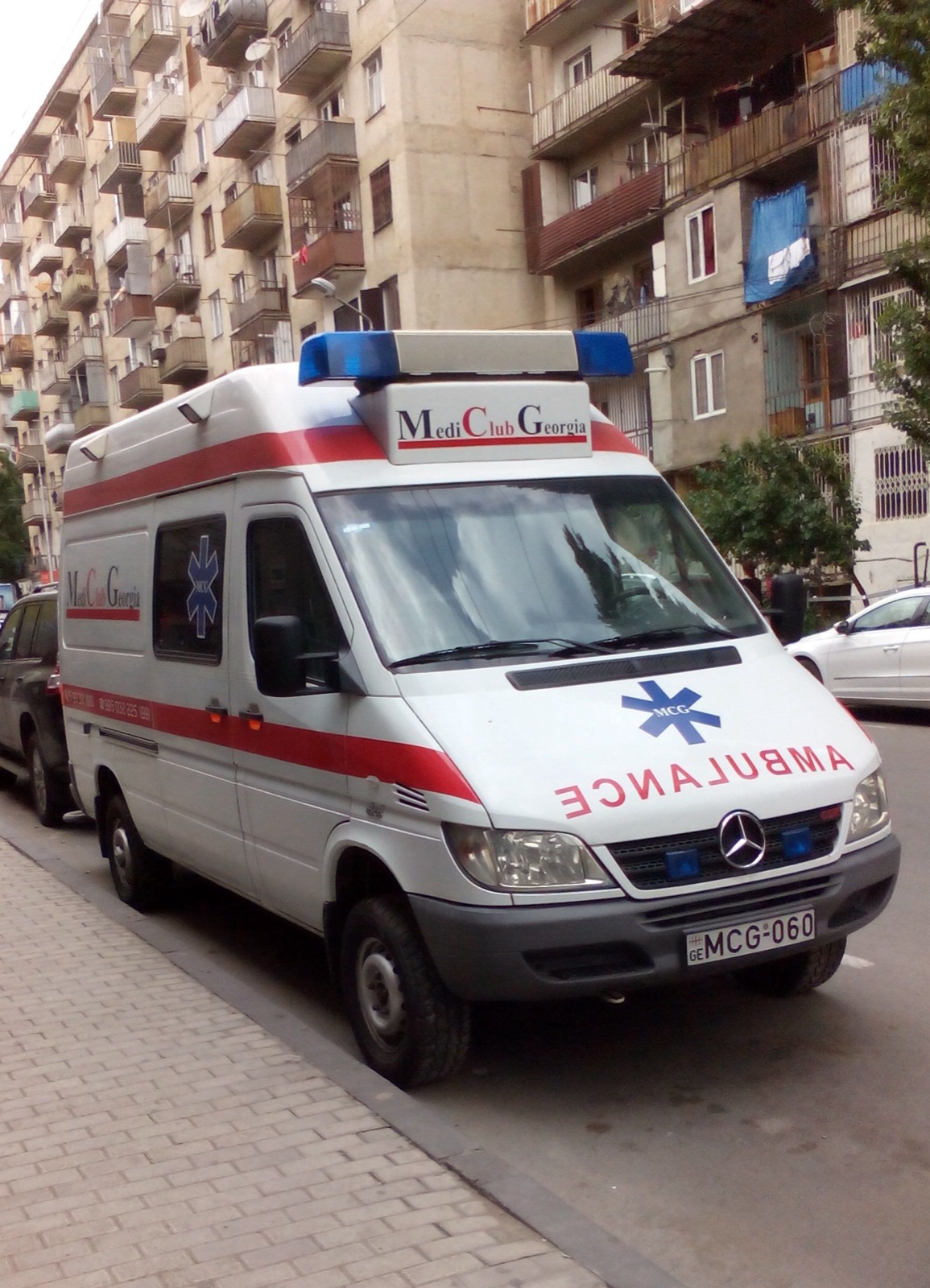
State ambulances in Georgia are free for everyone, including foreigners without insurance or a residence permit. The number is 112, a single emergency line that works across the country and connects even without a SIM card. Save it to your phone during your first week in Georgia.
Once the patient is admitted to hospital, though, inpatient care is billed as usual, either to the insurer or to the patient. Doctors deal with the emergency first and bring up payment only after the patient is out of danger.
Where to Get Treated: The Main Private Networks
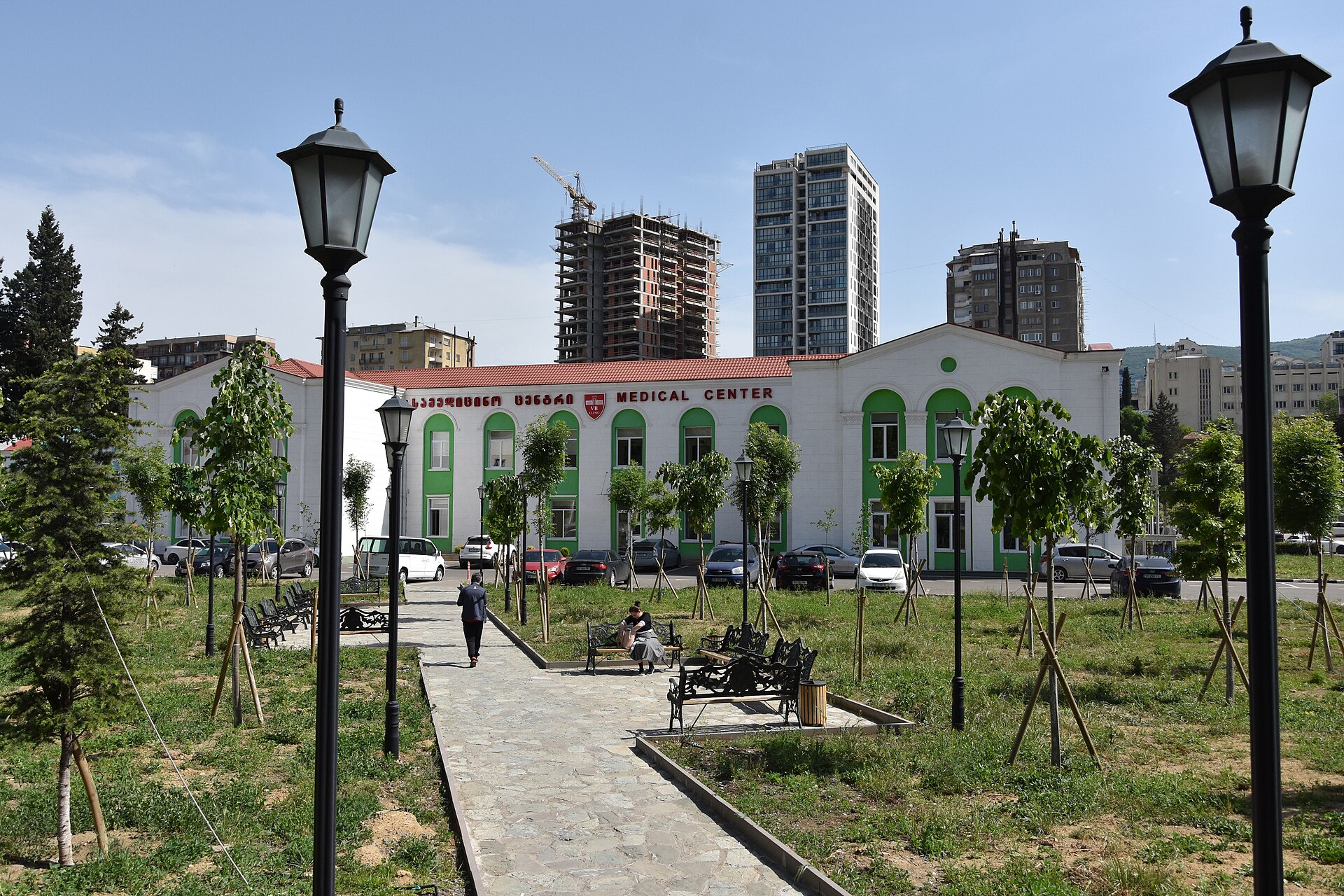
Evex Medical Corporation, the largest private network in the country, runs around 35 medical facilities across Georgia, 7 of them in Tbilisi. One phone line serves the whole network: 032 255 05 05.
New Hospitals, a large private general hospital at 12 Krtsanisi Street in Tbilisi (032 219 01 90), opened in 2011 and is considered one of the best equipped in the country. Another large general hospital in Tbilisi is Caucasus Medical Centre at 23 Kavtaradze Street (032 260 06 00).
For something simple like a checkup, lab tests or a routine consultation, the nearest private clinic in any major city will do, and seeing a doctor in Georgia doesn't require a referral. If you need major surgery or a rare specialist, find out in advance which of the big networks offers it.
Frequently Asked Questions
Residence permit holders aren't asked for an entry policy at the border, and the state program offers its free package only to a few groups. Most foreigners living in Georgia buy a private policy from 50 lari a month or pay for treatment themselves.
On paper, yes: a foreigner with a residence permit can join the Universal Healthcare Program on the same terms as citizens. The full free package, however, goes only to socially vulnerable families with a rating of up to 70,000 points, recipients of a Georgian state pension, children under 6, students and people with severe disabilities. Anyone earning more than 40,000 lari a year is left out of the program entirely.
Yes, a state ambulance is free for everyone, including foreigners without insurance or a residence permit. Inpatient care at the hospital the ambulance takes you to is billed as usual, either to your insurer or to you.
A GP visit costs 50 to 70 lari at a chain clinic and 100 to 200 lari at a clinic for foreigners, while a specialist consultation costs 60 to 100 or 150 to 250 lari. A complete blood count at Synevo costs about 20 lari, an MRI costs 270 to 680 lari, and an emergency room visit at a private hospital costs 80 to 200 lari, excluding further treatment.
Without a residence permit you need an entry policy for the whole stay, up to 1 year, with at least 30,000 lari of cover. It must also cover the days after you return from trips abroad. Georgian insurers sell this kind of policy from 2 lari a day.
Residence permit holders don't need an entry policy. To live in Georgia, most of them take out a local health policy from 50 lari a month, which covers both hospital treatment and diagnostics.