Русский
 English
 ქართული
 Français
 Türkçe
 Հայերեն
 Қазақша
 Polski
 Azərbaycanca
 O'zbekcha
 中文
 Deutsch
 Español
 العربية
 فارسی
 हिन्दी
 עברית
 Banks and Finance 6 min read
Money in Georgia: Currency Exchange, Transfers and Which Cards Work
 GustawsonEditorial Team · Bebgur
In Georgia you pay only in lari, but dollars and euros change almost without loss: the gap between buying and selling rates at city exchange offices is under 1%. Visa and Mastercard cards from foreign banks work almost everywhere, while Mir cards do not, and since summer 2026 Zolotaya Korona no longer sends transfers to Georgia.
Below, in order: the current exchange rate, where and what to exchange, which cards work, what ATMs charge, how to send money from Russia, Kazakhstan, Armenia and Europe, when cash must be declared at the border and how much to tip.
Currency and exchange rate
The Georgian currency is the lari, divided into 100 tetri. Banknotes in use are 5, 10, 20, 50, 100 and 200 lari, and coins range from 5 tetri to 2 lari.
Official National Bank of Georgia rates on 1 October 2026:
- 1 US dollar: 2.60 lari
- 1 euro: 2.96 lari
- 1 British pound: 3.46 lari
- 1 lari: about 32 rubles, 169 tenge or 140 dram
The lari has strengthened against the dollar during 2026, so the old rule of thumb of 2.7 lari per dollar no longer holds. The current rate is published on nbg.gov.ge and in banking apps.
Can you pay in dollars
By law the lari is the only legal tender in the country. The only exceptions are duty free shops and free industrial zones. Cafes, shops and taxis will not take dollars, and a seller who accepts foreign currency risks a fine.
The one common exception in practice is renting an apartment in Georgia. Rent is almost always quoted in dollars, and many landlords take cash dollars. Formally payments must be in lari, so write the amount and currency into the contract and get a receipt for every payment.
Where to exchange money
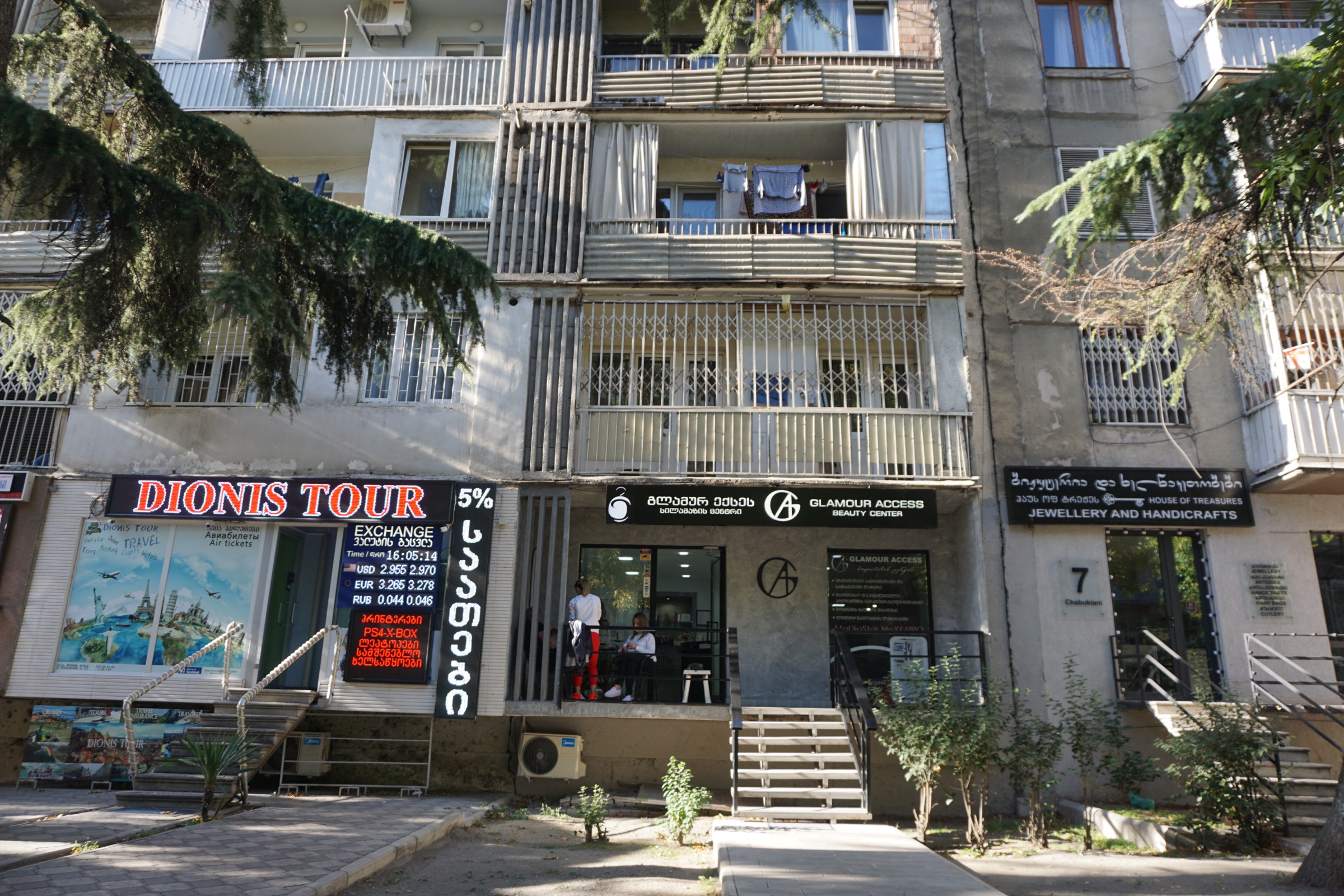
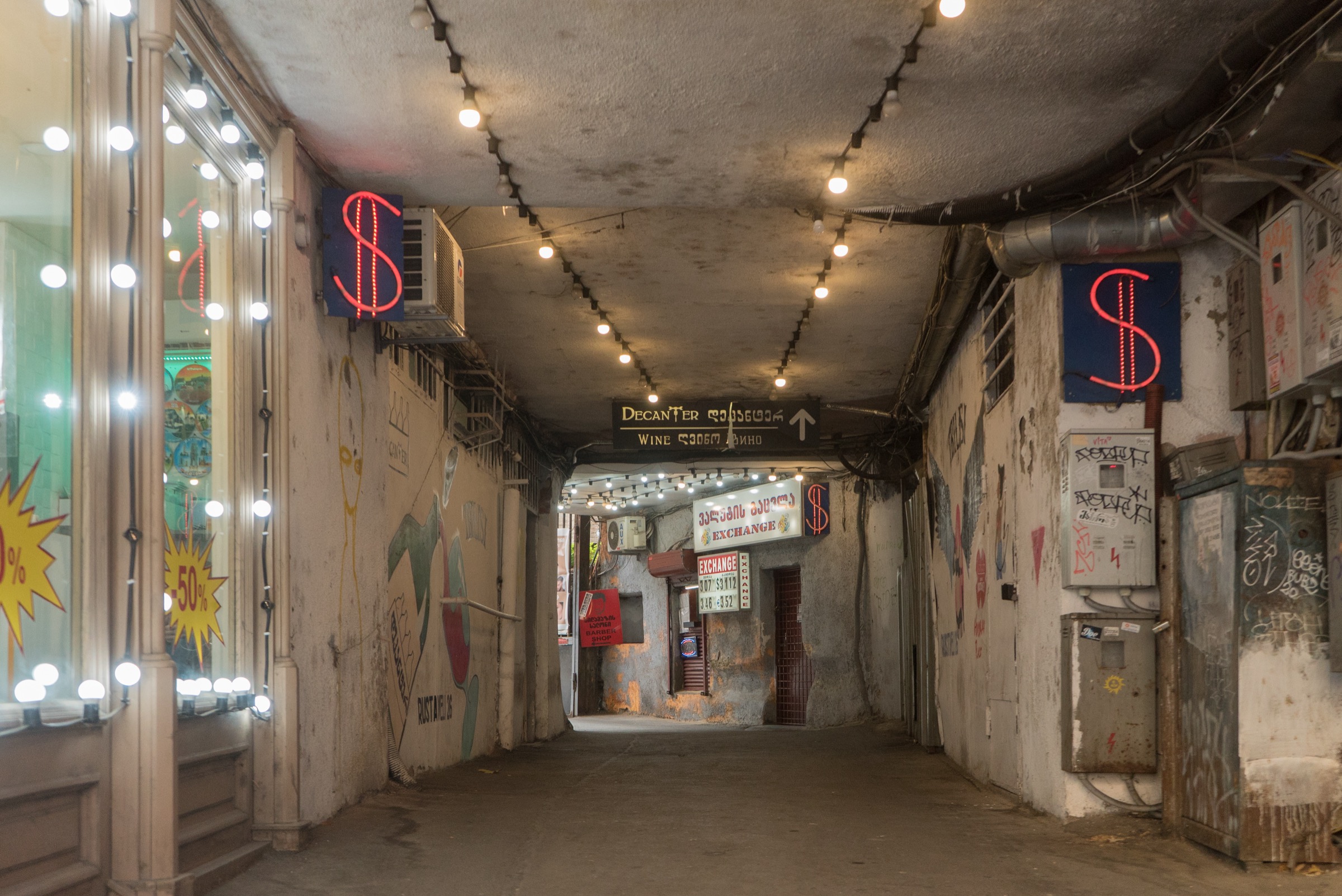
City exchange offices give the best rates: central Tbilisi has dozens of them, especially around Freedom Square, Rustaveli Avenue and the Dezerter Bazaar. At the airport the rate is 5-8% worse, so exchange or withdraw only 50-100 lari there for the ride from Tbilisi airport and your first expenses.
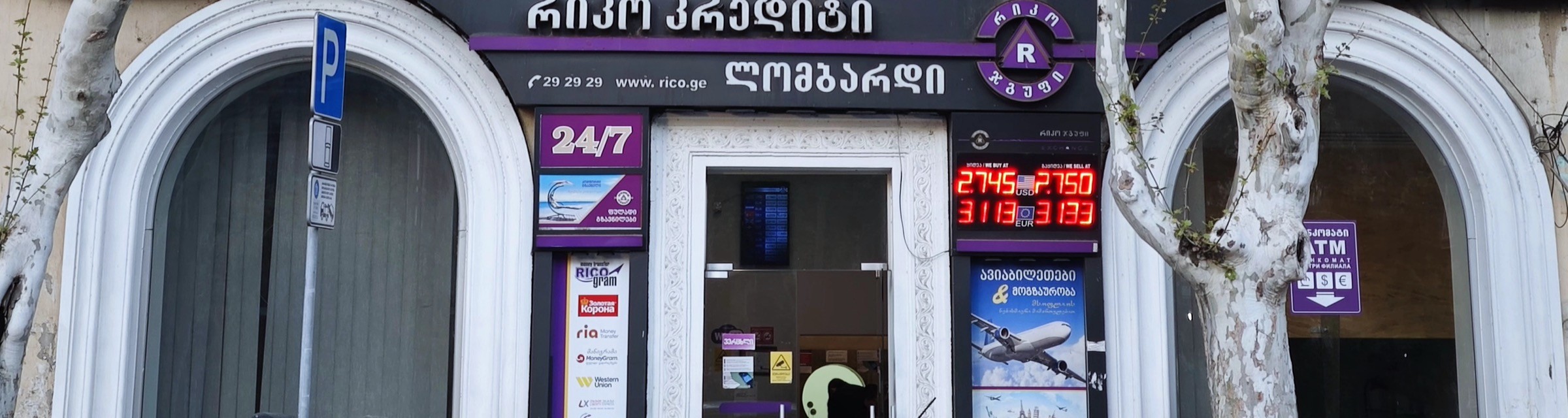
Which currency to bring shows in the gap between buying and selling rates. Here is an example from the large exchange chain Rico Credit on 1 October 2026:
| Currency | Buy | Sell | Loss on a round trip |
|---|---|---|---|
| US dollar | 2.602 lari | 2.606 lari | about 0.15% |
| Euro | 2.935 lari | 2.945 lari | about 0.3% |
| British pound | 3.425 lari | 3.445 lari | about 0.6% |
| 100 rubles | 2.80 lari | 3.02 lari | about 7.5% |
| 1000 dram | 6.80 lari | 7.10 lari | about 4.3% |
| 1 Turkish lira | 0.051 lari | 0.054 lari | about 5.7% |
Dollars and euros change almost without loss, rubles, dram and lira noticeably worse. Not every exchange office takes tenge. If you have a choice, bring dollars or euros.
Exchange offices do not ask for a passport for ordinary amounts. The law requires identification for a single transaction above 15,000 lari. Banks ask for a passport for any exchange.
How not to lose money on exchange:
- Look at the "buy" column (ყიდვა): that is the rate at which the office buys your currency.
- The big numbers on the board sometimes apply only to amounts from 1,000 dollars, and a commission may be in small print. Before handing over money, ask how many lari you will get.
- Ask for a receipt: the office must issue one and display its rates and commission clearly.
- Count the money before you leave the window.
Which cards work
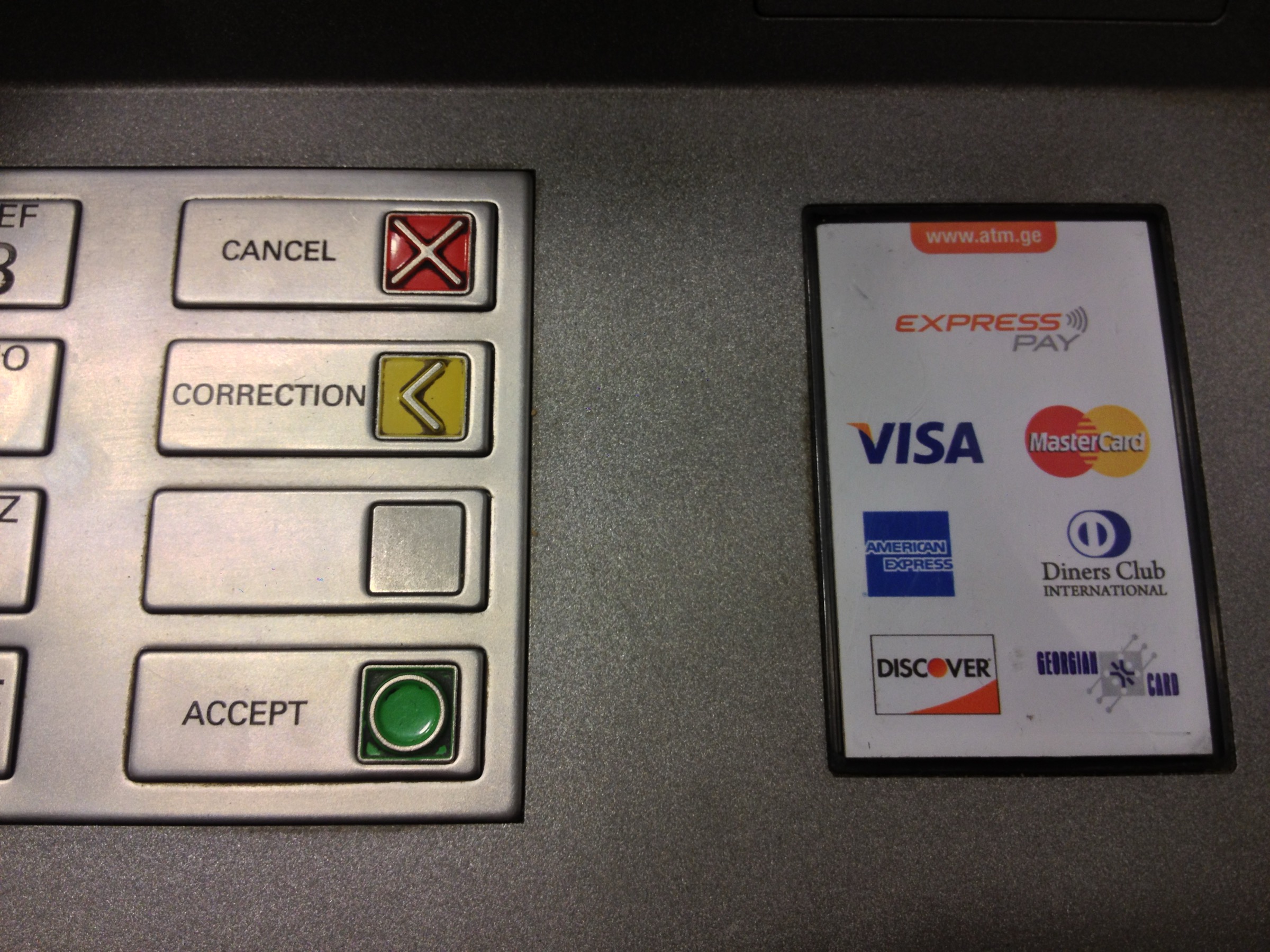
Visa and Mastercard cards from foreign banks are accepted almost everywhere in cities: shops and malls in Georgia, cafes, pharmacies, petrol stations and public transport. Contactless payment, Apple Pay and Google Pay work. American Express is taken mainly by hotels and upscale restaurants.
Mir cards work nowhere, neither in terminals nor at ATMs. Visa and Mastercard cards issued by Russian banks do not work either because of sanctions. UnionPay cards from Russian banks sometimes go through at ATMs and large stores but are often declined, so do not rely on them.
You need cash at markets, on intercity minibuses (marshrutkas), in village guesthouses and at street kiosks. For a taxi in Georgia ordered through Bolt, Yandex Go or other apps you can pay by card or in cash.
If a terminal or ATM offers to charge you in your home currency instead of lari, decline. This on-the-spot conversion costs 3-5% more than your own bank's rate.
ATMs
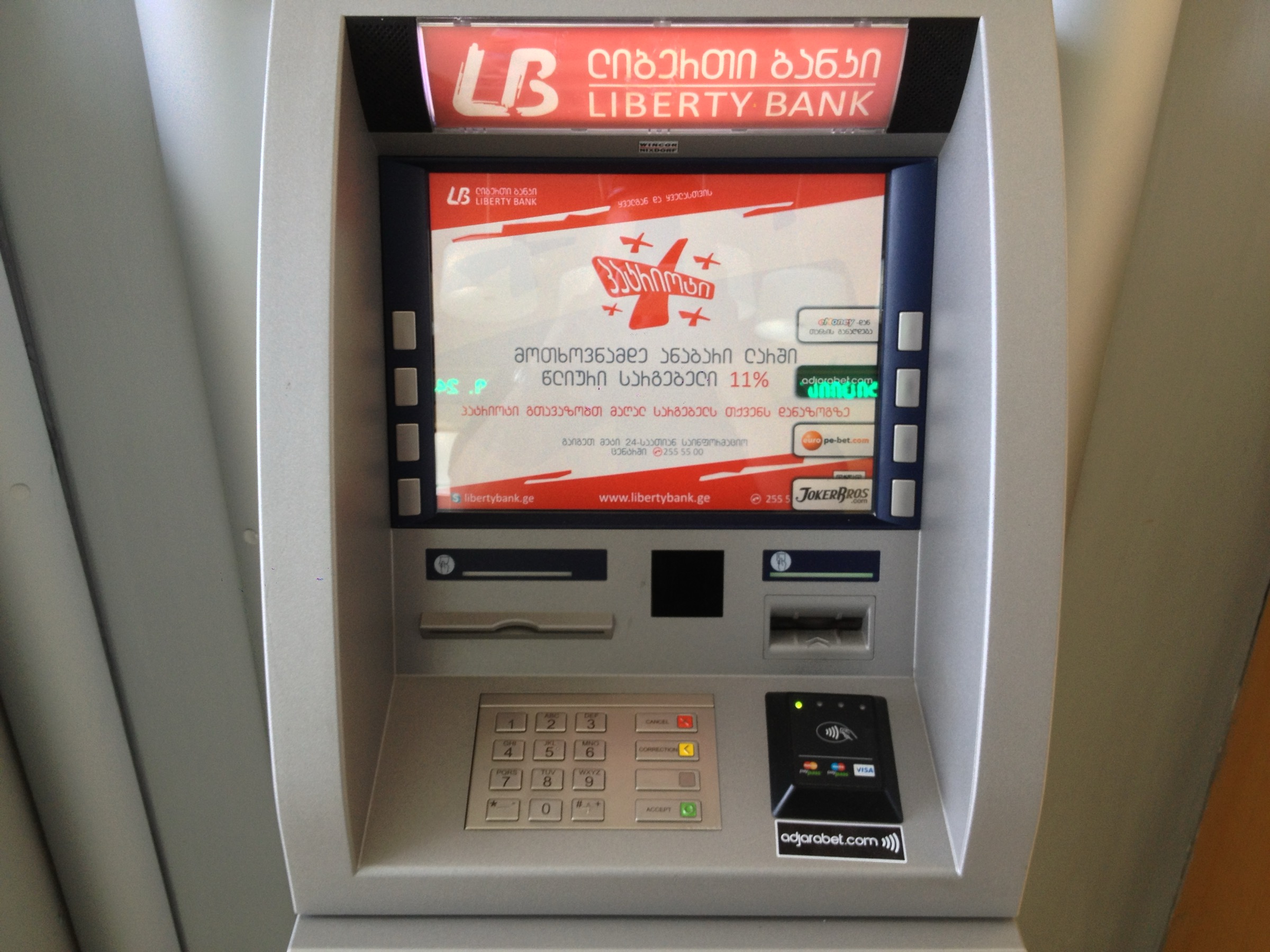
ATMs are everywhere, and almost all accept foreign Visa and Mastercard. The Georgian bank's fee is shown on the screen before you confirm, and you can cancel the withdrawal.
| Bank | Fee for a foreign card |
|---|---|
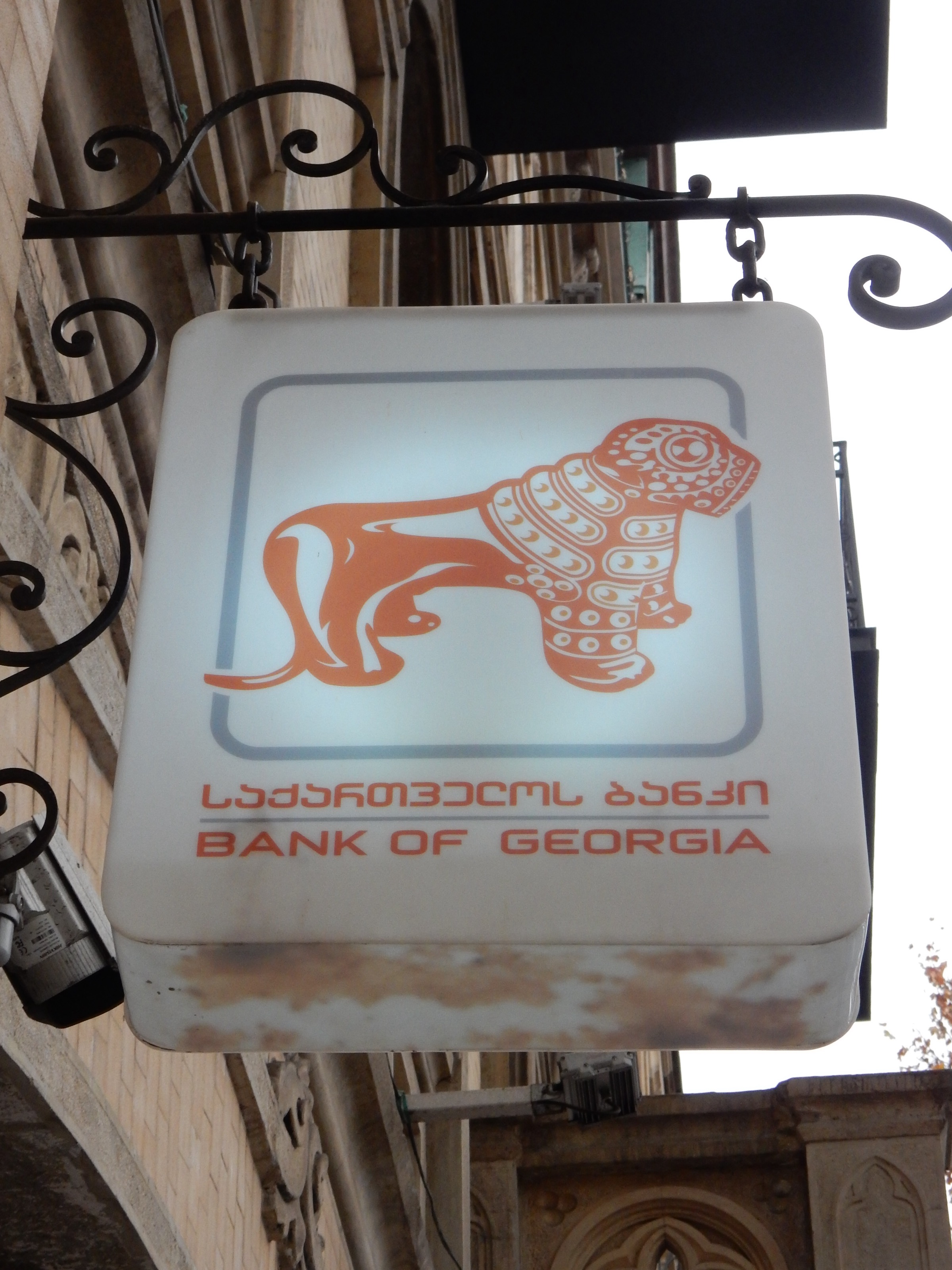
| Bank of Georgia (orange) | about 3 lari |
| TBC (blue) | usually 3-5 lari |
| Credo | about 6 lari |
| Basisbank, Cartu Bank | no fee according to 2026 reports, but few ATMs |
A single withdrawal is usually capped at 500-2,000 lari, depending on the bank and the machine. Your own bank will also charge for a foreign withdrawal, so it pays to withdraw less often and in larger amounts.
Some ATMs dispense dollars, less often euros, but with a separate fee. If the money is for spending in Georgia, withdraw lari.
Transfers from Russia
Since 24 July 2026 Zolotaya Korona no longer sends transfers to Georgia: the European Union sanctioned its operator. TBC Bank also states on its website that these transfers are currently unavailable. In August 2026 transfers from Russia to Georgia fell by 88%.
Some Russian banks still send money to TBC and Bank of Georgia cards or via SWIFT, but the list of working routes changes almost every month. Before sending, check with your bank whether transfers to Georgia work right now, and start with a small amount.
Georgian banks scrutinize incoming transfers from Russia, especially large ones. Be ready to show documents on the source of funds, or the transfer may be delayed.
Transfers from Kazakhstan, Armenia and Uzbekistan
From Kazakhstan you can send money from a Kaspi Gold card to a Visa or Mastercard card of a Georgian bank: Georgia is not on the list of countries Kaspi blocks. From Armenia the fastest option is Intel Express: the fee is about 1%, and money arrives in roughly 10 minutes.
Western Union, MoneyGram and Ria work from all three countries. Fees depend on the amount and country, so compare the final amount in lari on the service's website before sending.
Transfers from Europe, the UK and the US
Georgia is not part of the SEPA zone, so euros from the European Union arrive as a regular international SWIFT transfer in 1-5 business days. An incoming SWIFT transfer at Bank of Georgia costs 0.2%, minimum 15 dollars, plus the sending bank's fee.
Wise is usually cheaper and faster: it pays lari directly into a Georgian bank account by IBAN, and most transfers arrive the same day. Revolut works as a foreign account, but you cannot open one with a Georgian address.
How to receive a transfer
The easiest way is to receive money into your own bank account in Georgia: in the TBC app a Western Union, MoneyGram or Ria transfer can be credited using the transfer code, without visiting a branch.
Cash pickup is available at branches of TBC, Bank of Georgia, Liberty Bank and other banks. You need your passport, the transfer code, the sender's name and the amount. Payouts are in lari, dollars or euros, depending on the transfer system.
Cash at the border
You can bring in and take out any amount, but cash above 30,000 lari (about 11,500 dollars) must be declared at customs, both on entry and on exit. This applies to foreign currency, lari and traveler's checks.
Undeclared money can be confiscated: such cases happen, for example, at the Sarpi crossing on the Turkish border. The rule is easy to break by accident if you carry cash to buy an apartment or a car.
Tipping
Restaurants often add a 10-15% service charge, shown on the bill, and then you do not need to tip extra. If there is no charge, leave about 10%.
In cafes and bars people simply round up. Tipping in taxis is optional, and in Bolt you can add a tip in the app within 15 minutes after the ride.
How much money to bring
The most convenient setup is to keep most of your money on a foreign bank card and carry a reserve of cash dollars or euros in case the card gets blocked. Before the trip, tell your bank you will be paying in Georgia.
Someone moving without a ready income should have 3,000 to 7,000 dollars at the start: the relocation budget for Georgia includes the apartment deposit, the agent's fee and a cushion for at least three months.
Summary
- You pay only in lari, about 2.6 lari per dollar and 2.96 lari per euro.
- Bring dollars or euros and exchange in the city, not at the airport.
- Visa and Mastercard from foreign banks work, Mir does not.
- At terminals and ATMs choose to be charged in lari.
- Zolotaya Korona has not worked for Georgia since July 2026.
- Declare cash above 30,000 lari at the border.
Frequently Asked Questions
No, by law you pay only in lari, and shops and cafes will not take dollars. In practice apartment rent is usually quoted in dollars, but formally it too should be paid in lari.
No, neither in terminals nor at ATMs. Visa and Mastercard cards from Russian banks do not work either, and UnionPay cards from Russian banks go through only sometimes. Visa and Mastercard from foreign banks are accepted almost everywhere.
Zolotaya Korona has not worked for Georgia since 24 July 2026. Some Russian banks send transfers to TBC and Bank of Georgia cards or via SWIFT, but the routes change often: check with your bank before sending and start with a small amount.
Any amount, there is no limit. But cash above 30,000 lari, about 11,500 dollars, must be declared at customs on entry and on exit, otherwise it can be confiscated.